Communal Bodies Are the Architecture of Joy
Why I built a bathhouse. And why that was just the beginning.
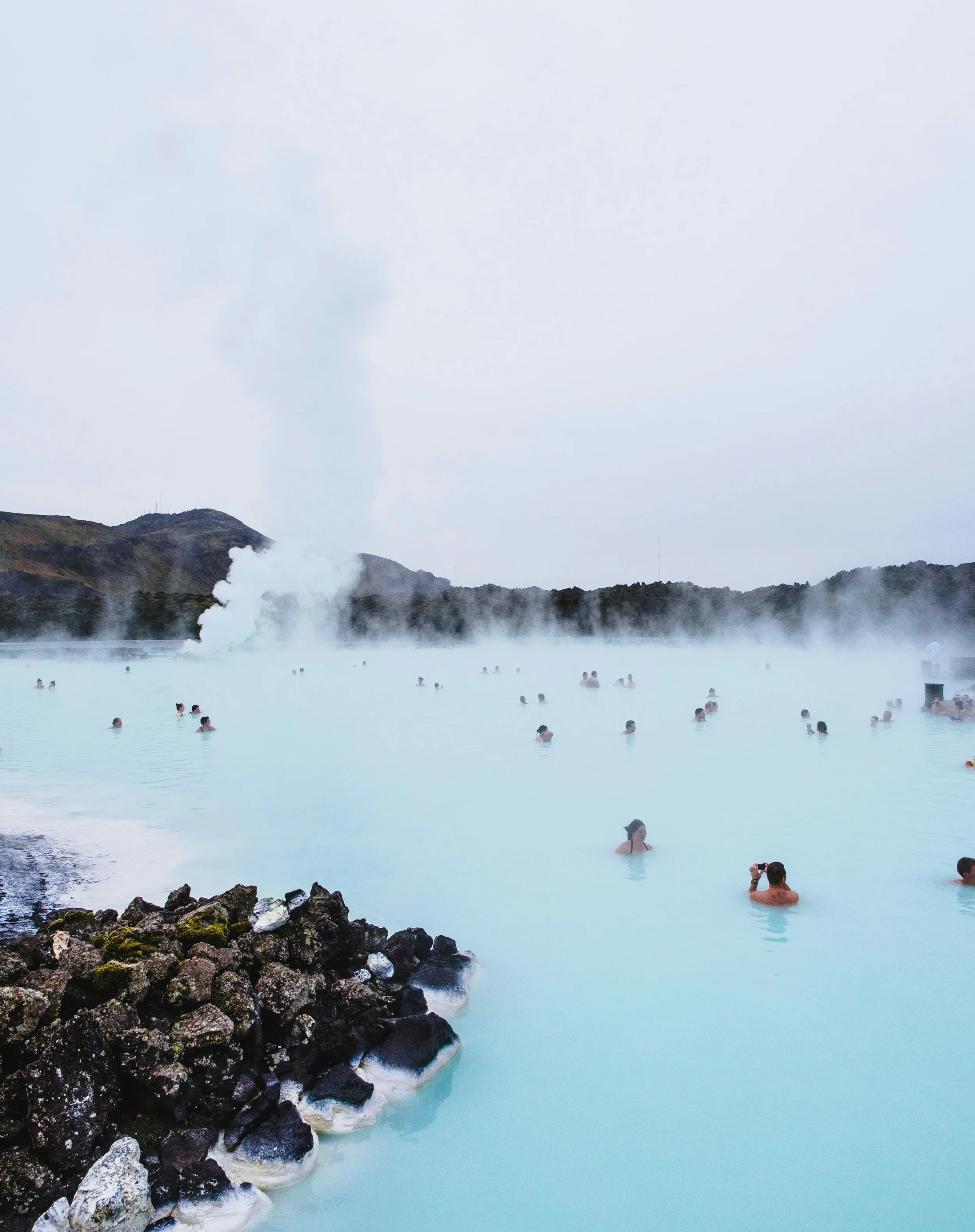
Communal bodies in the blue lagoon. Image by Jeff Sheldon.
There’s a particular kind of exhaustion that doesn’t come from working too hard. It comes from spending too much time in spaces that weren’t designed for you to actually be anywhere.
You know the ones. The gym that’s all mirrors and metrics. The hotel spa that smells like a scented candle trying to be a forest. The “wellness experience” that makes you feel subtly inadequate by the time you leave. Spaces that gesture toward rest but are really just selling you something — a body you should have, a calm you clearly haven’t achieved yet, a version of yourself that is, somehow, still not quite enough.
I’ve spent the last decade thinking about this. And building against it.
How I got here
I started by building a bathhouse.
Sense of Self (SOS) opened in Melbourne in 2020, and the premise was almost embarrassingly simple: what if a place that was for your body wasn’t actually about your body? What if we separated wellbeing from beauty standards, from performance, from the relentless optimisation culture that has colonised the wellness industry?
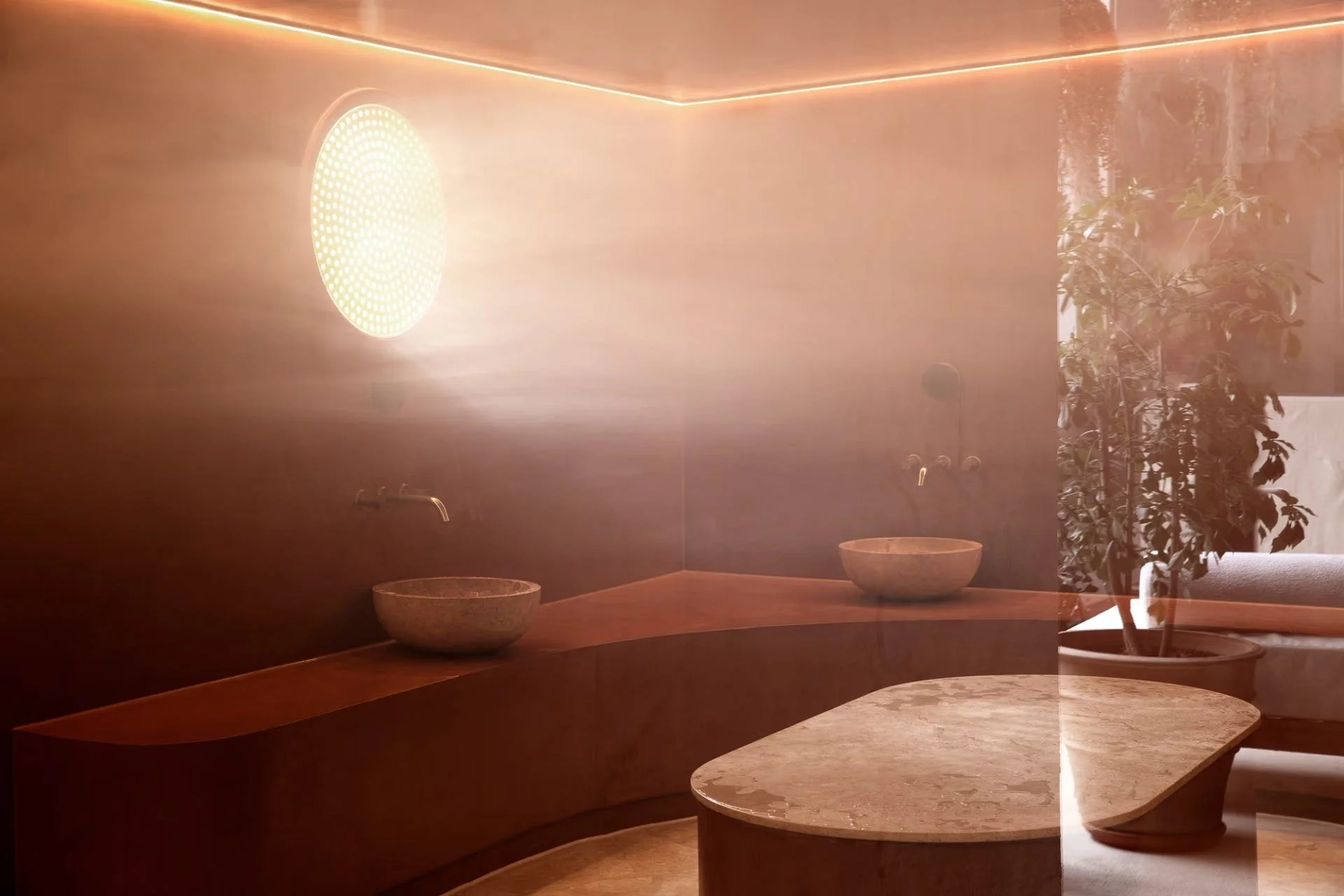
The hammam at Sense Of Self (SOS). Image by Martina Gemmola.
What if you could just... arrive? As you are. And be received by a space that was designed to soothe your nervous system rather than audit your appearance?
Turns out, people were hungry for exactly that. Not because they didn’t care about how they looked — but because they were exhausted by spaces that only cared about that. They wanted somewhere that asked less of them. That held them a little. That felt, in the oldest sense of the word, like a refuge.
Sense of Self taught me something I inherently knew but hadn’t yet proved: that the built environment is a form of communication. A space tells you what you’re worth, how you’re expected to behave, whether you belong.
And most of our public spaces — the commercial ones, the wellness ones, the hospitality ones — have been quietly telling a lot of people that they don’t.
Spas in 2015 were the design problem nobody had solved
When I began working toward what would become Sense of Self, I noticed something odd. Melbourne’s café culture had undergone a complete transformation over the previous decade — spaces that were once purely functional had become genuinely considered, architecturally interesting, aesthetically ambitious. People felt, intuitively, that the design of a place shapes the quality of your experience inside it.
Wellness spaces hadn’t received the same attention. As a former filmmaker, I was moved by mise en scène, perspectives, tension. In architecture, it was Luis Barragán’s use of colour and light, Carlo Scarpa’s honest forms, and the monoliths of Louis Kahn. Softness that envelopes you and warmth that surrounds you, but on a scale that is awe-inspiring. A palette chosen not just aesthetically but bodily — temperature, texture, opacity, softness and colour all considered for their effect on the nervous system, not just the eye.
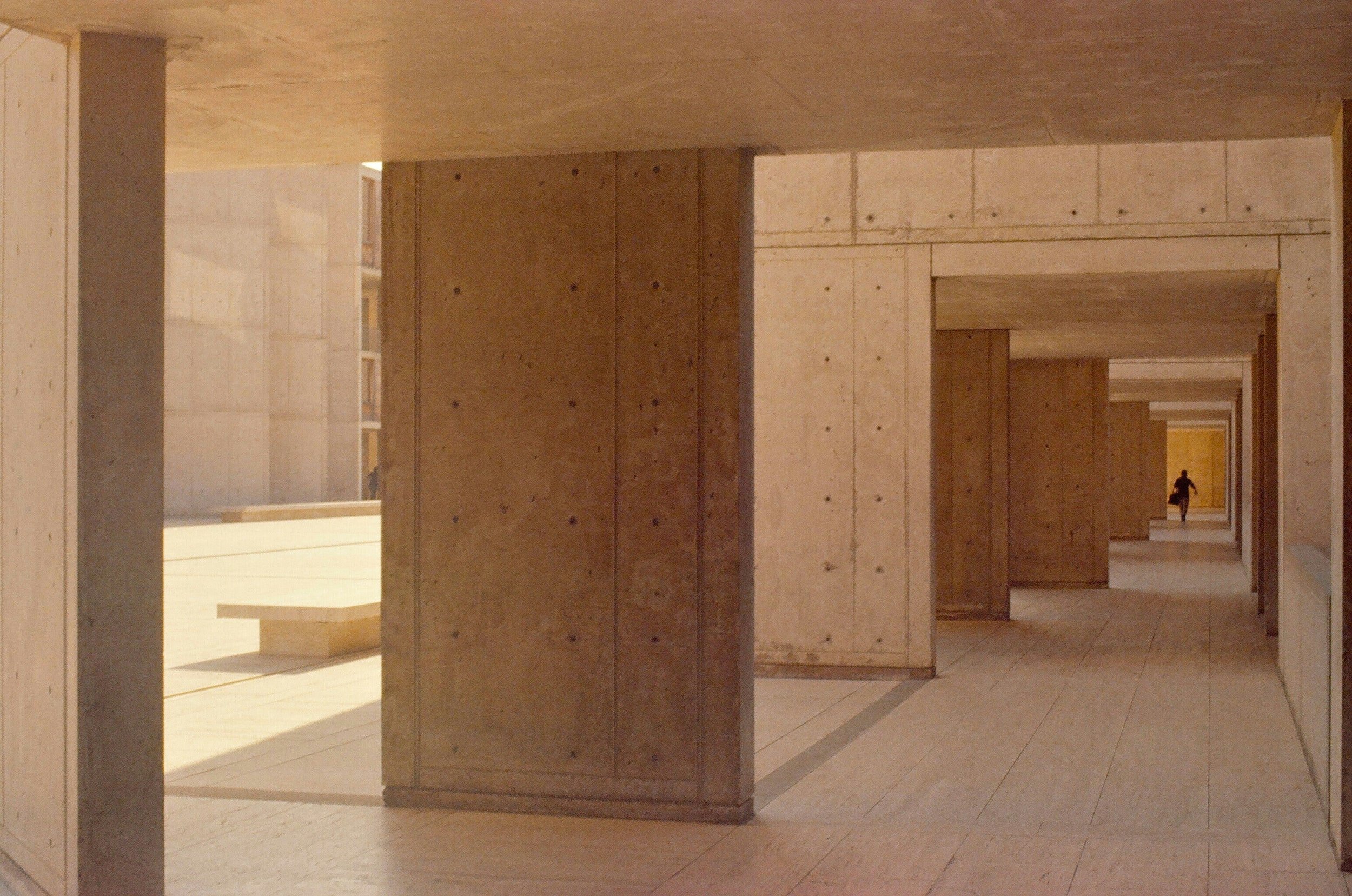
Salk Institute by architect Louis Kahn. Image by Noritsu Koki.
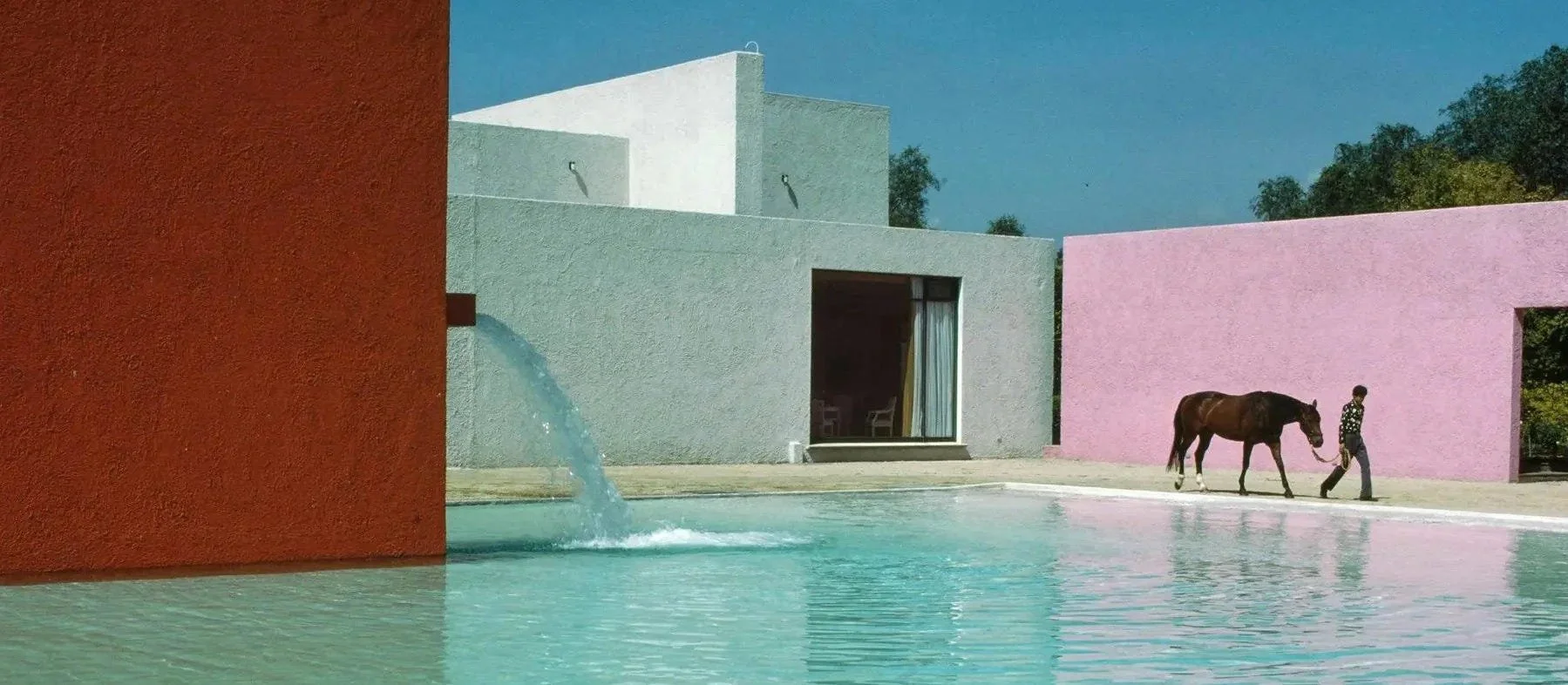
San Cristóbal stables in Mexico City designed by Luis Barragán. Image courtesy of René Burri via Magnum Photos
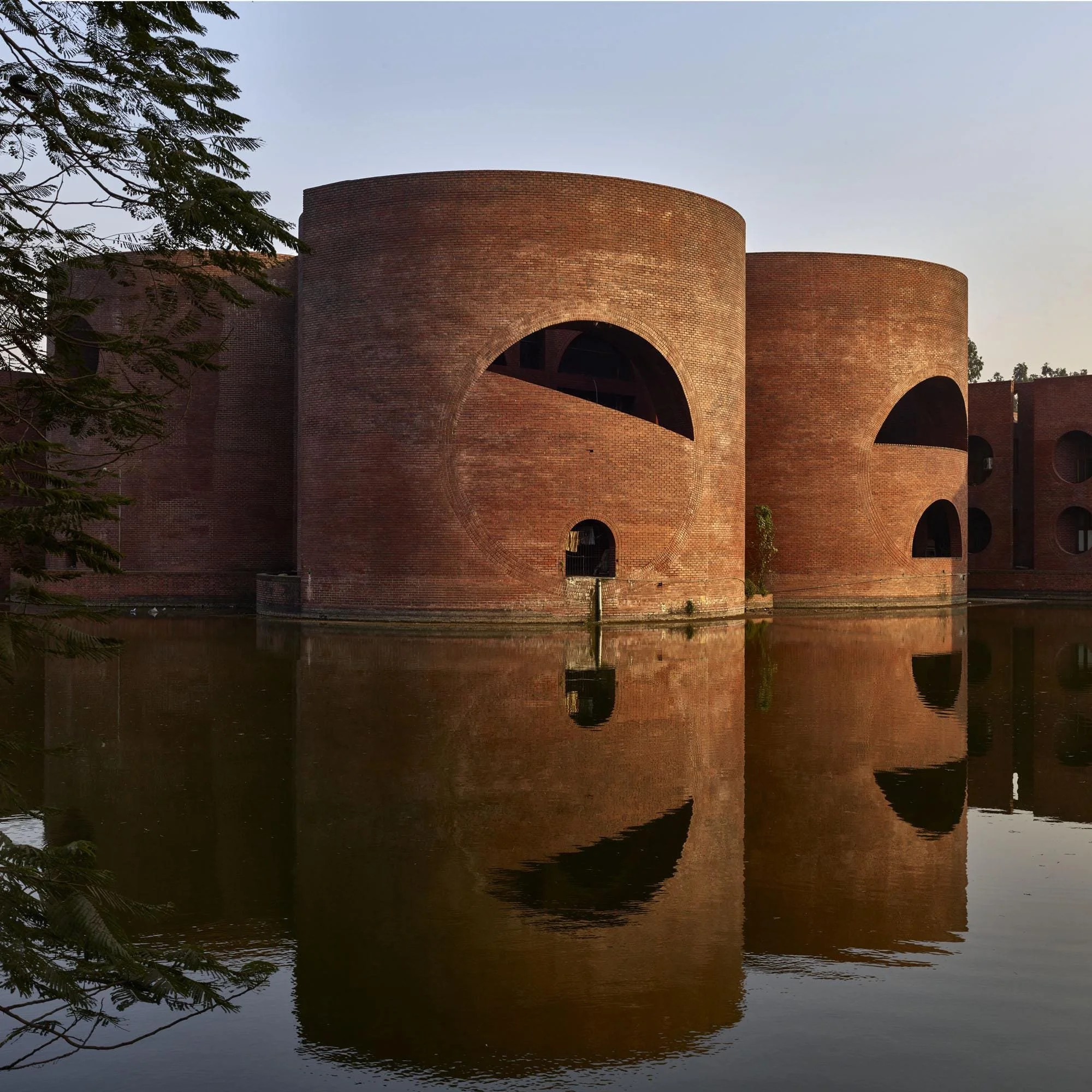
National Parliament of Bangladesh by architect Louis Kahn. Image by Cemal Emden
What the bathhouse taught me
The design worked not because it was beautiful (though I think it was), but because beauty in service of belonging changes how a space communicates. A space tells you what you’re worth, how you’re expected to behave, whether you belong. Most wellness spaces, despite their aspirational branding, had been quietly telling a lot of people that they didn’t.
What happened at SOS was that people arrived, looked around at a space that had clearly been built with real intention, and exhaled. The Greek word xenia — a form of love extended specifically to the stranger, the outsider — was very much in my mind. I wanted people to feel not like outsiders who had paid their way in, but like the space had been expecting them.

Bodies in water. Images L-R: Madison Oren; Getty Images; Tabitha Turner.
The communal bath did something else, too. The thing that ancient bathing culture understood, and that we have largely dismantled from modern life, is that there is something irreplaceable about being in proximity to other people without an agenda. You can’t perform in warm water for very long. You slow down. You notice other bodies, doing the same thing, in all their variety. You feel, in some quiet way, less alone.
You cannot scale that feeling.
What I'm actually worried about
Here’s the thesis I keep returning to, the one that got me out of bed and into this new chapter:
We are living through a crisis of communal life. And joy is one of the first casualties.
In 1919, the theatrical impresario Max Reinhardt commissioned architect Hans Poelzig to create something extraordinary: the Grosses Schauspielhaus. Reinhardt dreamed of creating a theatrum mundi (world theatre): theatre that was immersive and democratic, designed for the crowd rather than the connoisseur. It was a massive domed auditorium for 3,000 people, hung with stalactite-like plasterwork that made the whole interior feel like a living cave. The Nazis seized it in 1933 and stripped that interior out — destroying, arguably, the very thing that made it joyful.
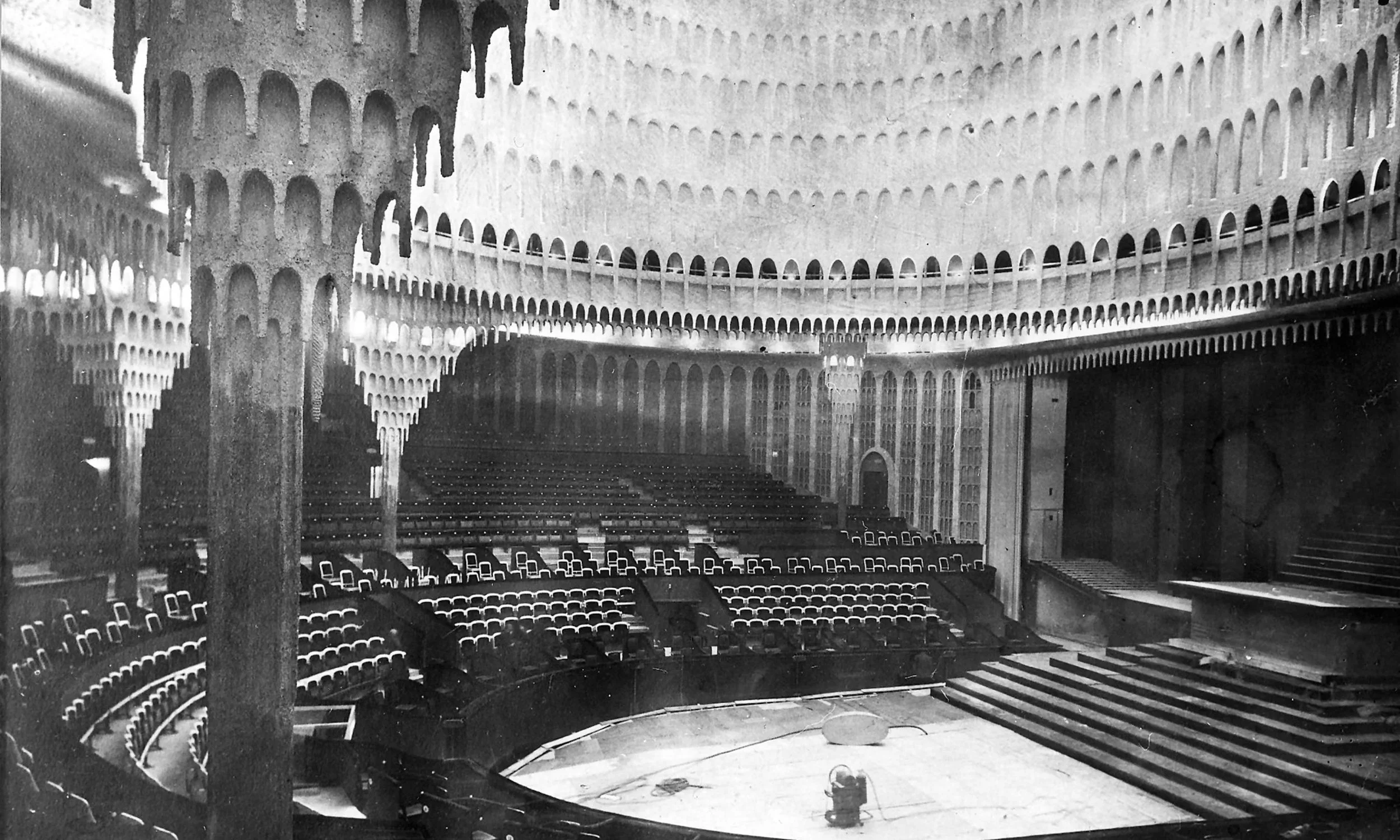
The Grosses Schauspielhaus designed by architect Hans Poelzig.
What moved me about this story was the ambition of creating spaces entirely in service of collective feeling, so unapologetically designed around the experience of being together, that the people who feared that kind of joy felt compelled to destroy it.
The 21st century has been extraordinarily efficient at dismantling the structures that used to hold people together — the piazza, the community hall, the front porch, the bathhouse. The spaces that existed not for productivity or consumption, but for the simple, civilising act of being in proximity to other humans without an agenda.
We replaced them with the simulated intimacy of social media and convenience that has keeps us working more, and socialising less. We told ourselves this was progress. We told ourselves connection had been scaled.
But you cannot scale the feeling of sitting next to someone in warm water. You cannot algorithmically replicate the particular ease that comes from sharing a meal with strangers who become, briefly, something more. The body keeps score, as they say — and the body knows when it’s been cheated out of real contact.
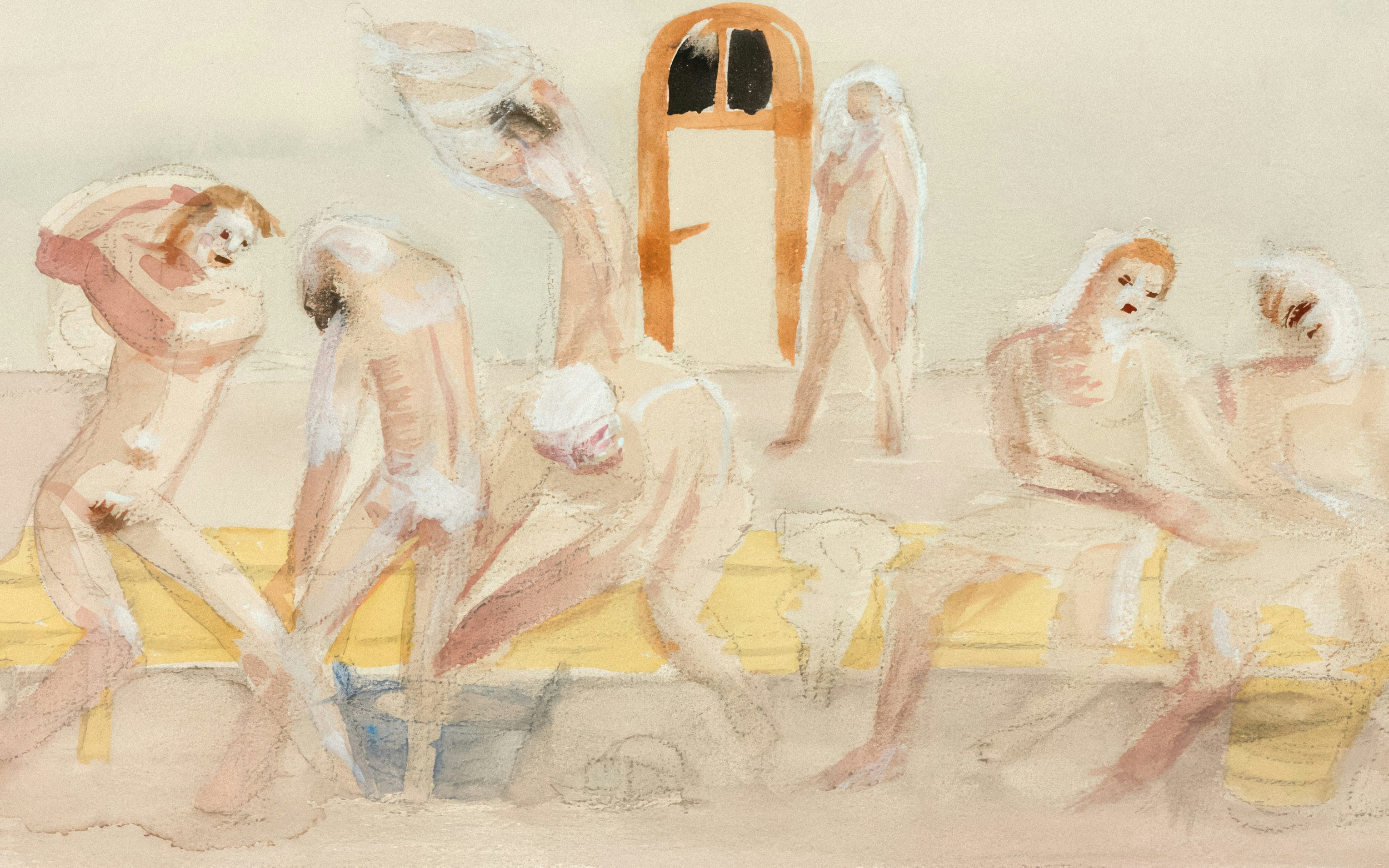
"Saun" by Luts, Karin. Providing institution: Tartu Art Museum.
The loneliness data is grim. The anxiety data is grimmer. The rates of people who report having not enough close friends, limited community, no sense of belonging — these numbers have been climbing for years, and the built environment has responded with commodification. We are still designing cities, hotels, wellness venues, residential developments, and hospitality experiences for a version of human life that is increasingly out of step with what people actually need. More places to perform. Fewer places to rest. More spaces that optimise for transaction. Fewer that optimise for connection.
What Communal Bodies is
Sense of Self was one answer to one question. Communal Bodies is the broader inquiry.
What I’m interested in building now — and thinking about, and writing about — are the spaces designed for ritual, restoration, and collective care across the full arc of a human life.
Some of these will be familiar: the bathhouse, the retreat, the restorative hotel. Some will be less expected. Spaces for different chapters of living. Spaces that meet people where they actually are, rather than where the wellness industry pretends they want to be.